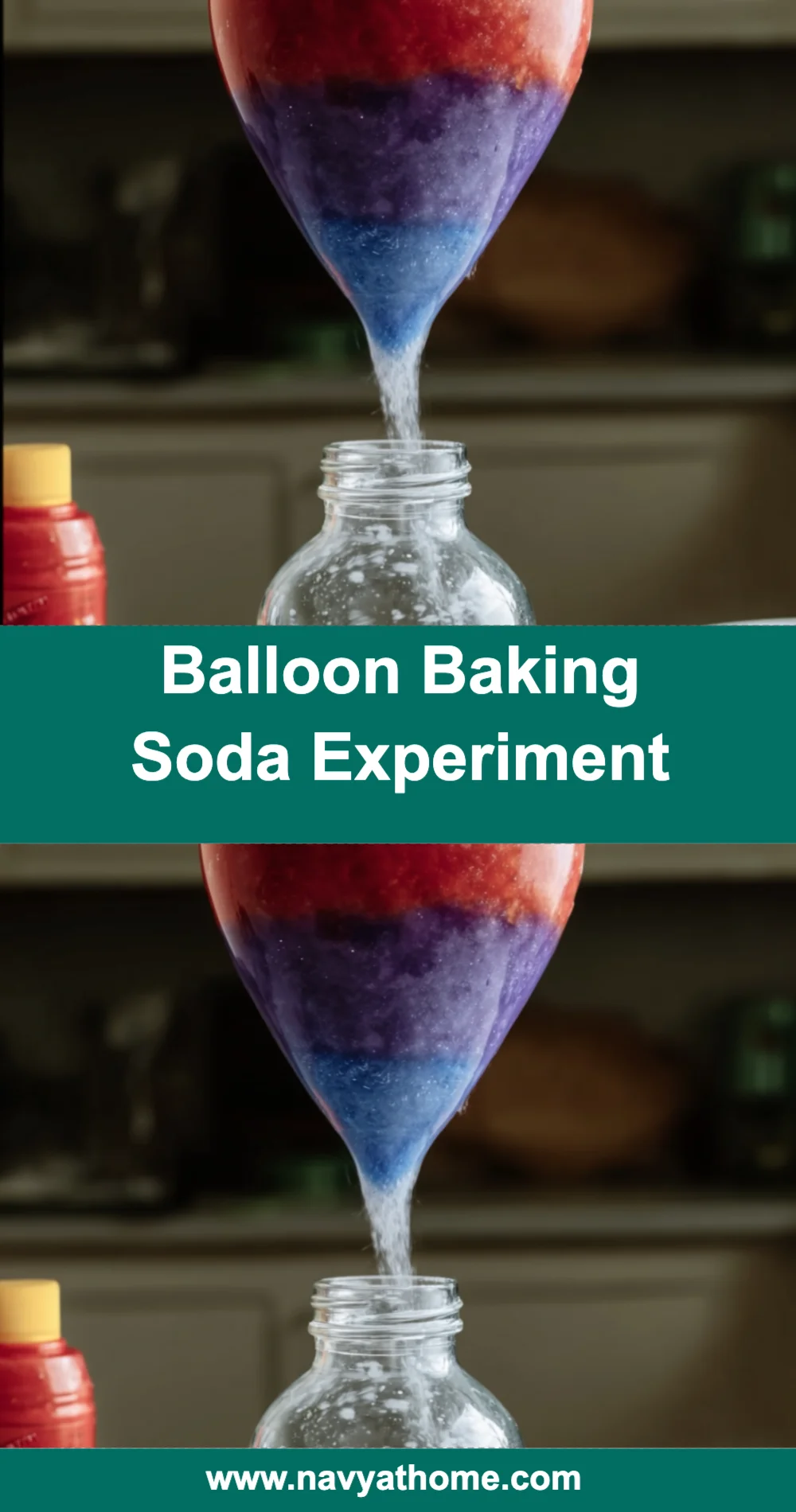
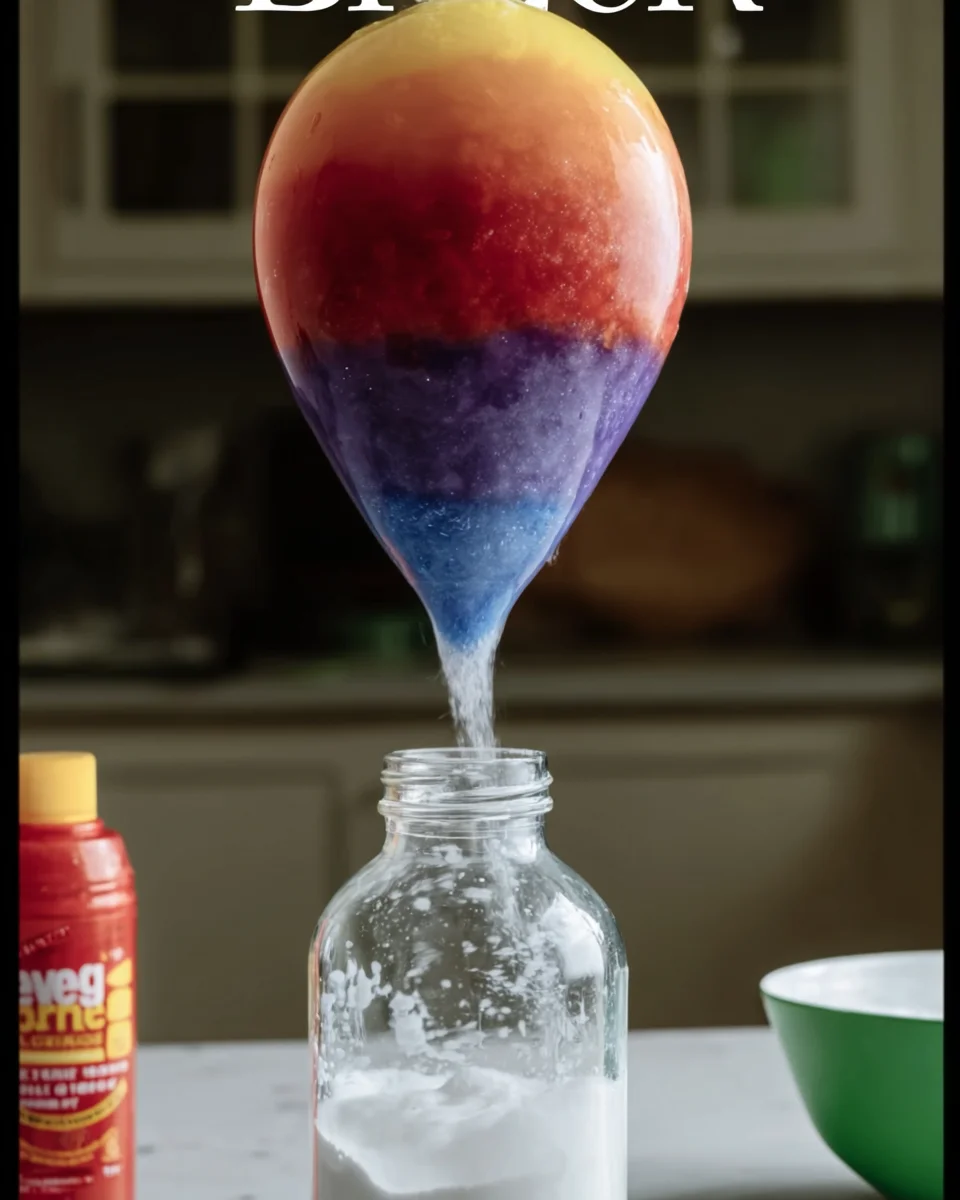
The Balloon Baking Soda Experiment is an exciting way to explore chemical reactions. This simple yet captivating science activity demonstrates how baking soda and vinegar interact to create carbon dioxide gas, inflating a balloon in the process. Perfect for kids and adults alike, it’s a hands-on approach to understanding basic chemistry principles.
| Prep Time | Cook Time | Total Time | Servings | Difficulty | Cuisine |
|---|---|---|---|---|---|
| 5 minutes | 0 minutes | 5 minutes | 1 | Easy | Science Experiment |
Why This Recipe Works
This experiment works because it showcases a classic acid-base reaction. Baking soda (a base) reacts with vinegar (an acid) to produce carbon dioxide gas, resulting in the inflation of the balloon. I remember the first time I conducted this experiment with my children; their eyes lit up as they watched the balloon grow larger. It’s a fantastic way to ignite curiosity about science and chemistry.
The reaction is not only visually impressive but also a great opportunity to discuss scientific concepts such as gas production, chemical reactions, and states of matter. Observing how the gas fills the balloon makes learning interactive and memorable. This experiment is an excellent example of how fun science can be in everyday life.
Ingredients
| Ingredient | Quantity | Notes |
|---|---|---|
| Balloon | 1 | Any standard balloon will work. |
| Baking soda | 2 tablespoons | Can use baking powder as an alternative, but results may vary. |
| Vinegar | 1 cup | White vinegar is preferred for clarity in reaction. |
| Funnel | Optional | Helps in adding baking soda to the balloon without mess. |
| Plastic bottle | 1 | Make sure the bottle is clean and dry. |
Step-by-Step Instructions
-
Prepare the Balloon
Use the funnel to carefully add 2 tablespoons of baking soda into the balloon. If you don’t have a funnel, you can try to pour the baking soda directly into the balloon, but it may be messy.
-
Fill the Bottle
Pour 1 cup of vinegar into the plastic bottle. Make sure the bottle is empty and clean before you start.
-
Attach the Balloon
Without letting the baking soda fall into the vinegar yet, carefully stretch the opening of the balloon over the neck of the bottle. Ensure that the baking soda stays inside the balloon.
-
Start the Reaction
Once the balloon is securely attached, lift the balloon and let the baking soda fall into the vinegar.
-
Observe the Reaction
Watch as the baking soda reacts with the vinegar, producing carbon dioxide gas. This gas will fill up the balloon and cause it to inflate.
-
Experiment Further
You can try using different amounts of baking soda or vinegar to see how it affects the size of the balloon.
Chef Tips for Perfect Results
- Use a sturdy balloon that can withstand the pressure of the gas.
- Ensure the plastic bottle is completely dry to avoid diluting the vinegar.
- Experiment with different types of vinegar for varying reactions.
- Conduct the experiment outdoors or in an area that can be easily cleaned.
- Try adding food coloring to the vinegar for a more visually appealing reaction.
Common Mistakes to Avoid
- Not securing the balloon properly; this can lead to leaks and a failed experiment. Always ensure the balloon is tightly attached.
- Using too much or too little baking soda; this can result in minimal gas production. Stick to the recommended measurements for best results.
- Neglecting to use a clean bottle; residue can affect the reaction. Always start with a clean container.
- Forgetting to lift the balloon after attaching; this is crucial for the reaction to occur. Make sure to lift it promptly to see the inflation.
Variations and Substitutions
| Ingredient | Substitution | Impact on Flavor |
|---|---|---|
| Baking Soda | Baking Powder | May produce a different reaction; less gas may be generated. |
| White Vinegar | Apple Cider Vinegar | Will not significantly affect the reaction but adds a different smell. |
Serving Suggestions and Pairings
This experiment pairs well with educational themes such as science fairs, classroom activities, or family science nights. It’s also a great way to introduce children to basic chemistry concepts, making it perfect for STEM learning at home.
Storage and Reheating
| Method | Duration | Instructions |
|---|---|---|
| Storage | N/A | This experiment is for immediate execution; do not store the ingredients once combined. |
Nutritional Information
| Nutrient | Amount per Serving |
|---|---|
| Calories | 0 |
| Protein | 0g |
| Carbohydrates | 0g |
Frequently Asked Questions
Can I substitute baking soda with something else?
Yes, you can use baking powder, but the reaction will differ, and you might not achieve significant inflation.
How do I know when the reaction is complete?
The reaction is complete when the balloon stops inflating. This usually happens within a few minutes as the gas is produced and fills the balloon.
Can I prepare this experiment ahead of time?
It’s best to prepare everything just before starting the experiment. The reaction should be immediate for maximum effect.
What happens if the balloon doesn’t inflate?
If the balloon doesn’t inflate, check to ensure the balloon is securely attached and that the baking soda and vinegar are fresh and not expired.
Is this experiment safe for children?
Yes, this experiment is safe for children, but adult supervision is recommended to ensure proper handling of materials and to explain the scientific concepts involved.
In conclusion, the Balloon Baking Soda Experiment is a fun and educational activity that illustrates fundamental chemistry principles. By engaging in this experiment, you’ll not only witness a fascinating reaction but also spark a love for science in your household. For more delicious recipes, check out the homemade rock candy recipe guide or easy s’more bars for treats you will love!
Balloon Baking Soda Experiment for Fun Learning
Ingredients
Equipment
Method
- Step 1: Use the funnel to carefully add 2 tablespoons of baking soda into the balloon. If you don't have a funnel, you can try to pour the baking soda directly into the balloon, but it may be messy.
- Step 2: Pour 1 cup of vinegar into the plastic bottle. Make sure the bottle is empty and clean before you start.
- Step 3: Without letting the baking soda fall into the vinegar yet, carefully stretch the opening of the balloon over the neck of the bottle. Ensure that the baking soda stays inside the balloon.
- Step 4: Once the balloon is securely attached, lift the balloon and let the baking soda fall into the vinegar.
- Step 5: Watch as the baking soda reacts with the vinegar, producing carbon dioxide gas. This gas will fill up the balloon and cause it to inflate.
- Step 6: You can try using different amounts of baking soda or vinegar to see how it affects the size of the balloon.
Notes