Ingredients
Equipment
Method
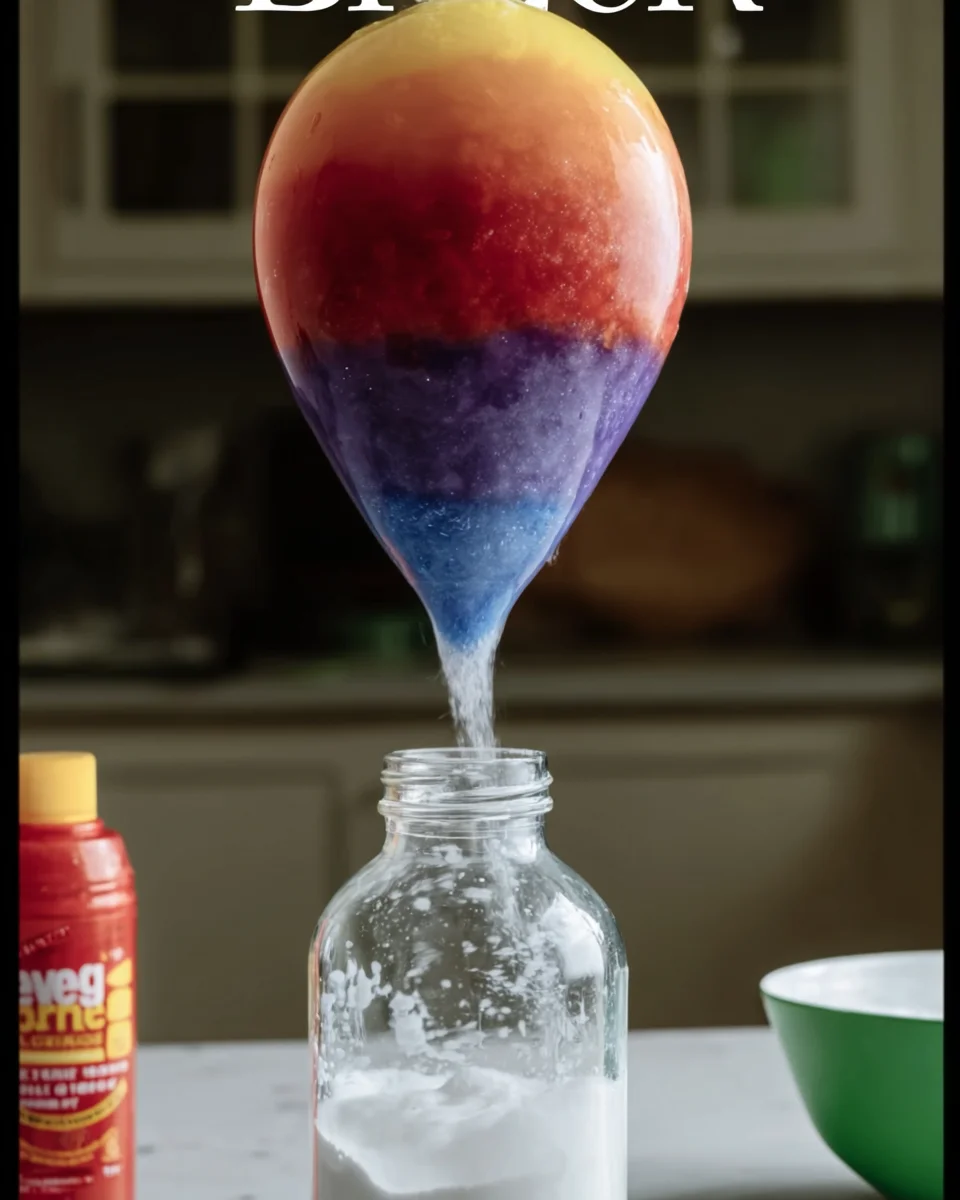
- Step 1: Use the funnel to carefully add 2 tablespoons of baking soda into the balloon. If you don't have a funnel, you can try to pour the baking soda directly into the balloon, but it may be messy.
- Step 2: Pour 1 cup of vinegar into the plastic bottle. Make sure the bottle is empty and clean before you start.
- Step 3: Without letting the baking soda fall into the vinegar yet, carefully stretch the opening of the balloon over the neck of the bottle. Ensure that the baking soda stays inside the balloon.
- Step 4: Once the balloon is securely attached, lift the balloon and let the baking soda fall into the vinegar.
- Step 5: Watch as the baking soda reacts with the vinegar, producing carbon dioxide gas. This gas will fill up the balloon and cause it to inflate.
- Step 6: You can try using different amounts of baking soda or vinegar to see how it affects the size of the balloon.
Notes
This experiment is for immediate execution; do not store the ingredients once combined.